Environment
Protecting the environment is of vital importance for overall well-being and a sustainable future. Challenges like climate change, water scarcity and land degradation demand urgent action. We believe that business must play a key role in driving positive environmental change, to ensure a healthy future for ourselves and generations to come.
Our focus is on sustainable water resource management, which is a cornerstone for healthy ecosystems and thriving communities. In partnership with Tata Trusts, we are working towards water conservation as well as its responsible use, that supports the long-term well-being of agriculture, communities and environment.


Combating Salinity Ingress in Coastal Gujarat
Coastal communities often face a unique threat: saltwater intrusion contaminating freshwater supplies. Our collaboration with Tata Trusts' Coastal Salinity Prevention Cell (CSPC) tackles this issue in Bhavnagar district, Gujarat.
Approach
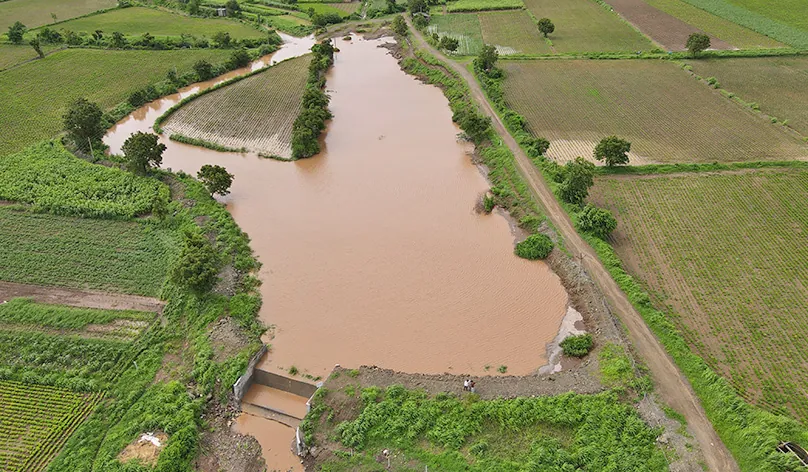
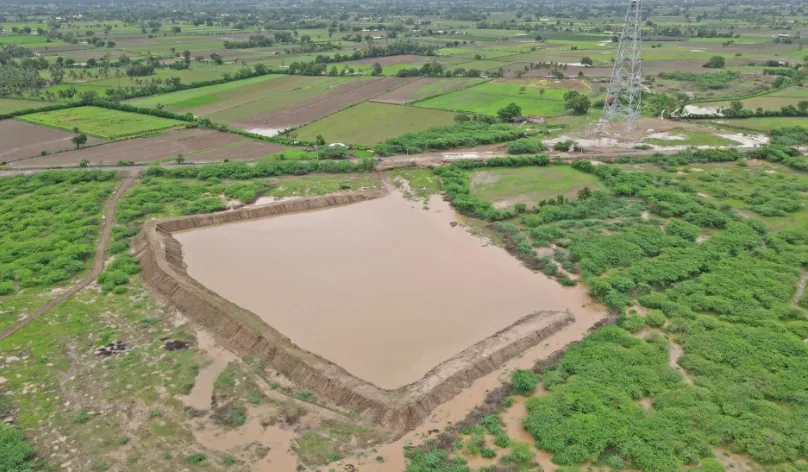
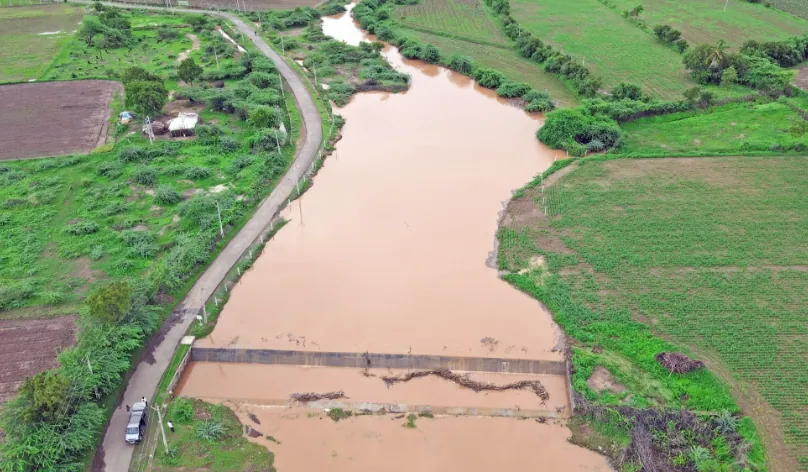
The project employs a comprehensive strategy to address water scarcity in coastal Gujarat. Firstly, the focus is on maximising rainwater harvesting which leads to an increase in the water table which results in lowering of the Total Dissolved Solids (TDS) levels in water. This process involves constructing and repairing water harvesting structures, desilting ponds and recharging wells to ensure efficient capture and storage of freshwater resources.
Secondly, sustainable water usage is promoted amongst farmers. This includes training them on using moisture meters for optimal water application and encouraging water-efficient irrigation methods.
Impact
- All 20 project villages (3,000 households) have been engaged - water budgeting, aquifer mapping, groundwater quality monitoring exercises have been conducted.
- 102 water harvesting and recharge structures developed.
- ~11 Crore Litres water storage capacity enhanced through desilting.
- A total of 10.7 MCFT (Million Cubic Feet) volume of water storage created.
- There has been an average decrease of 300 PPM (Parts Per Million) in the amount of total dissolved salts in the water implying a decrease in the salinity of the water.
- Improved water table with average increase in ground water levels by ~3.5 metres.
- 105 farmers demonstrated improved irrigation practices through moisture meters and water meters.


Transforming rainfed agriculture in Maharashtra
Limited water resources pose significant challenges for farmers in rain-dependent regions of Maharashtra. Dependence on rainfall for irrigation means only a single crop can be harvested in a year which leads to hunger, poverty and large-scale migration post Kharif cropping season. Our partnership with Tata Trusts' Collectives for Integrated Livelihoods Initiatives (CInI) implements a project to improve water security and agricultural productivity in three districts: Nandurbar, Dhule and Chandrapur.
Approach
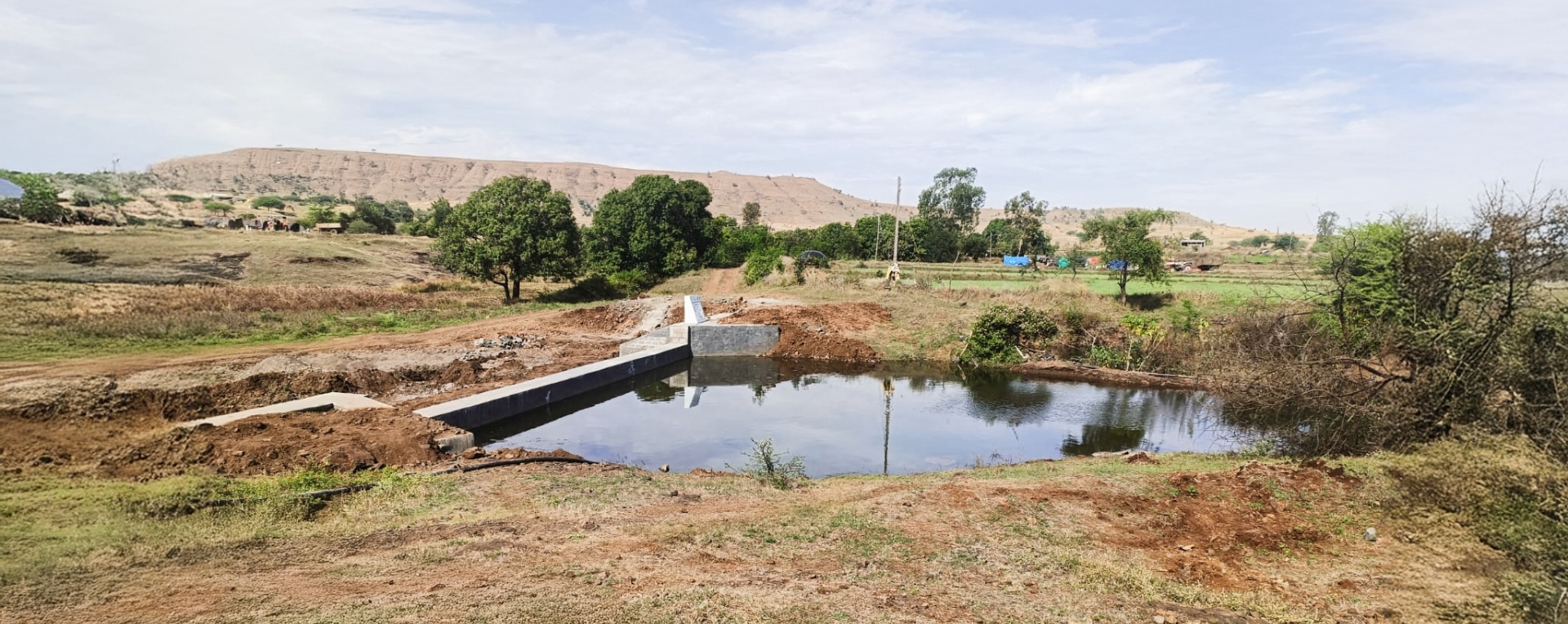
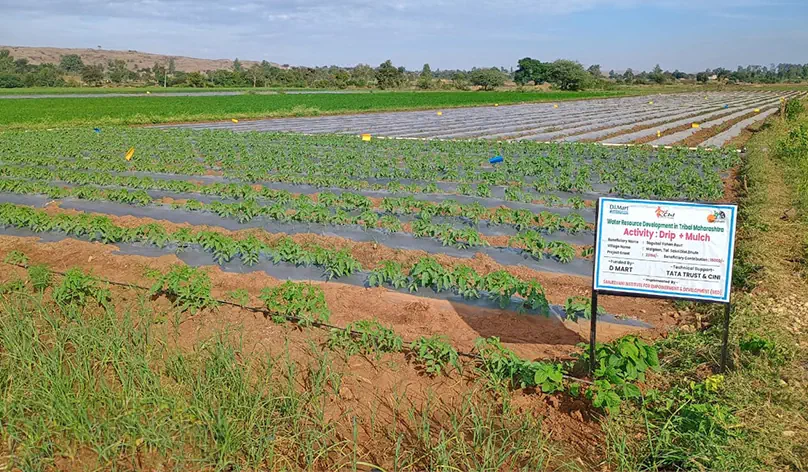
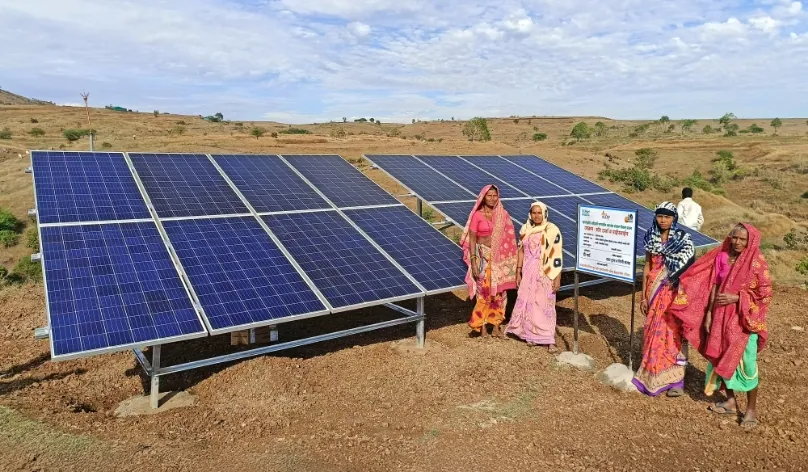
The project tackles water scarcity in Maharashtra by focusing on rainwater harvesting and sustainable irrigation practices. Construction of water harvesting structures like check dams slows down rainwater runoff, allowing for increased infiltration and storage of water in the soil. Additionally, farmers are trained on water-efficient irrigation methods like drip irrigation and provided with solar lift irrigation systems. This allows for targeted water application and reduces reliance on traditional, often wasteful, irrigation practices.
Impact
- Reached out to 1118 households across 196 villages.
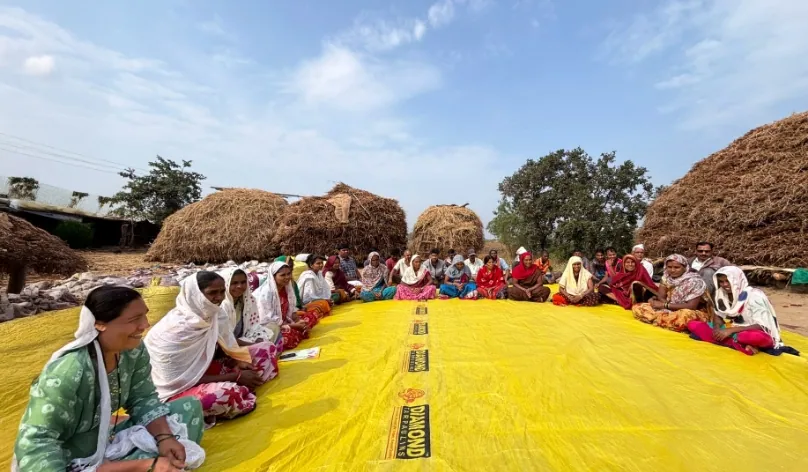
- Increased community participation through formation of 211 Water User Groups.
- Developed 16 water harvesting and recharge structures, restoring 1.97 MCFT of water.
- Introduced 53 renewable energy solutions through solar lift irrigation systems.
- Demonstrated micro-irrigation through drip and mulch technology in over 227 acres of land, potentially saving 60-70% water use against traditional irrigation.
Through our support of the CSPC and CInI programmes, we have significantly increased water storage capacity across Gujarat and Maharashtra. At present, the capacity in Gujarat (Bhavnagar) reached 10.73 MCFT and in Maharashtra (Nandurbar, Dhule and Chandrapur) reached 1.77 MCFT, totalling 12.5 MCFT (1 MCFT = 2.8 Crore litres).